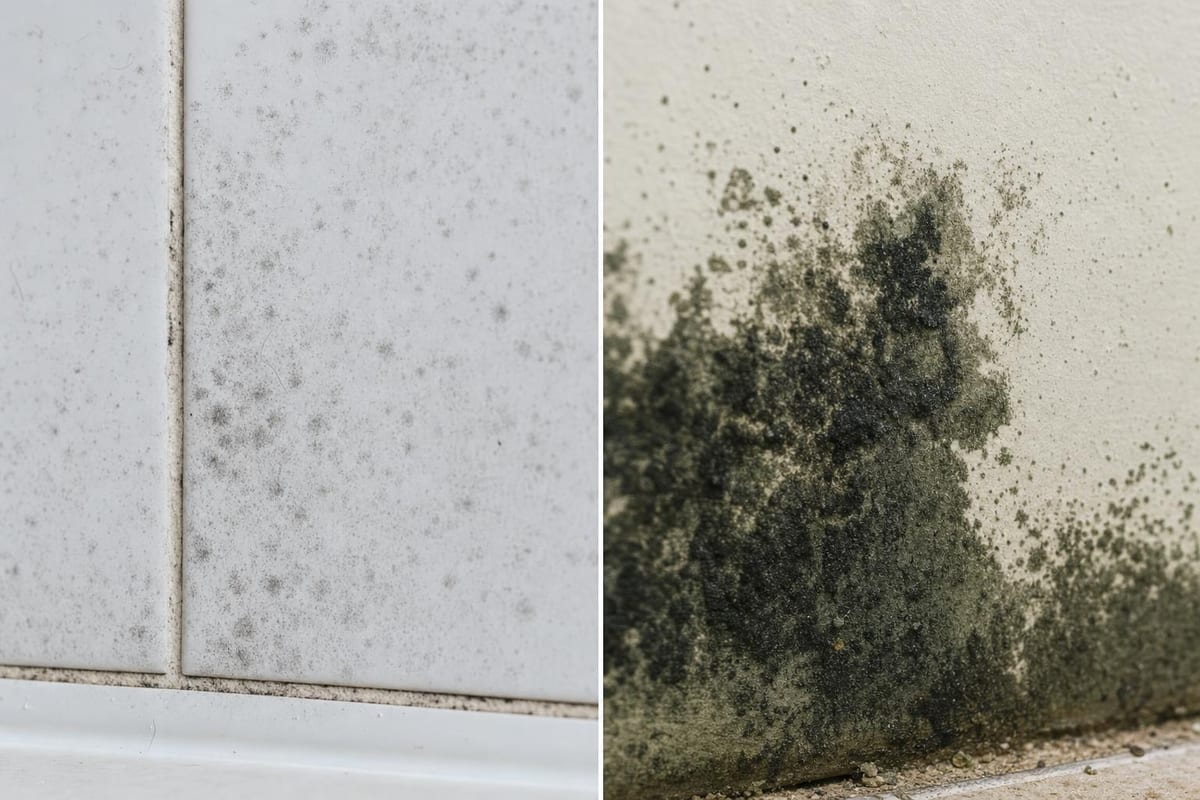
Black mold and mildew are constantly confused — they show up in the same damp places, and from a distance a dark patch on the wall could be either one. The difference matters, though: mildew is usually a surface nuisance you can wipe away, while black mold often signals a deeper, ongoing moisture problem that needs more than a quick clean.
This guide breaks down exactly how to tell them apart by color, texture, surface, and behavior, including what each looks like on walls, on wood, and in the shower. (Note for UK and Australian readers: "mould" and "mold" are the same thing — spelling only.)
The Quick Answer
- Mildew is a surface fungus. It looks flat and powdery, is usually white, gray, or yellowish (sometimes darkening with age), grows on top of damp surfaces, and wipes away fairly easily.
- Black mold is darker — greenish-black to true black — often slimy or fuzzy, raised rather than flat, and it grows into porous materials like drywall and wood. It tends to spread and return after cleaning.
If a patch wipes off and doesn't come back, it was probably mildew. If it's slimy, keeps returning, or comes with a strong musty smell, treat it as mold.
Is It Black Mold or Mildew? (30-Second Decision)
When you're standing in front of a dark patch and just need to know is it black mold or mildew, run it through these three questions:
- Does it wipe off cleanly? Lifts off and leaves the surface clean → leaning mildew. Smears, stains, or barely budges → leaning black mold.
- Is it flat or raised? Flat, dry, and powdery → mildew. Raised, slimy, or fuzzy → black mold.
- Has it come back before? Returns after cleaning, or comes with a strong musty smell you can't trace → treat it as black mold until proven otherwise.
Two or more answers pointing to mold means stop scrubbing and find the moisture source. When you genuinely can't call it, that uncertainty is exactly what photo identification is for — a clear close-up resolves most "black mold or mildew?" questions in seconds. The full breakdown below covers each signal in detail.
Side-by-Side Comparison
The photos in this guide show the pattern to look for: mildew reads as a flat, powdery film on the surface, while black mold reads as a darker, wet-looking growth with irregular, spreading edges. Here is the same contrast broken down factor by factor:
| Factor | Mildew | Black Mold |
|---|---|---|
| Color | White, gray, or yellow; dull gray-black with age | Dark green-black to true black |
| Texture | Flat, powdery, dry | Raised, slimy when wet, fuzzy when dry |
| Growth pattern | Sits on the surface | Penetrates porous materials |
| Common surfaces | Tile, grout, glass, window frames, fabric | Drywall, wood, ceiling tiles, insulation |
| Cleanup | Wipes off; rarely returns if dried | Often returns; may need remediation |
| Smell | Mild, musty | Strong, earthy, persistent musty odor |
| Moisture signal | Humidity or condensation | Sustained leak or prolonged saturation |
| Main risk | Allergy-type irritation | Allergens plus possible mycotoxins; structural damage |
How to Tell Black Mold From Mildew (Step by Step)
You can usually narrow it down without lab testing:
- Look at the color. Light and chalky leans mildew. Dark green-black leans mold. Color alone isn't proof — keep going.
- Check the texture. Flat and powdery is mildew. Raised, slimy, or fuzzy is mold.
- Do the wipe test. Wearing gloves and a mask, wipe a small spot. Mildew lifts off and leaves the surface mostly clean. Mold smears, leaves a stain, or barely budges because it has rooted into the material.
- Note the surface. On hard, non-porous surfaces (glass, tile, sealed grout) you're more likely looking at mildew. On porous materials (drywall, bare wood, ceiling tiles) a dark patch is more concerning.
- Watch the behavior. If it returns within days or weeks after cleaning, it's mold feeding on a moisture source you haven't fixed yet.
- Trust your nose. A strong, persistent musty smell — especially with little visible growth — usually means hidden mold inside walls or under flooring.
Photos help with the first two steps. If you're unsure, capture a clear, well-lit close-up and compare it against reference images or run it through an image-based mold identifier before deciding how to respond.
Black Mold vs Mildew on Walls
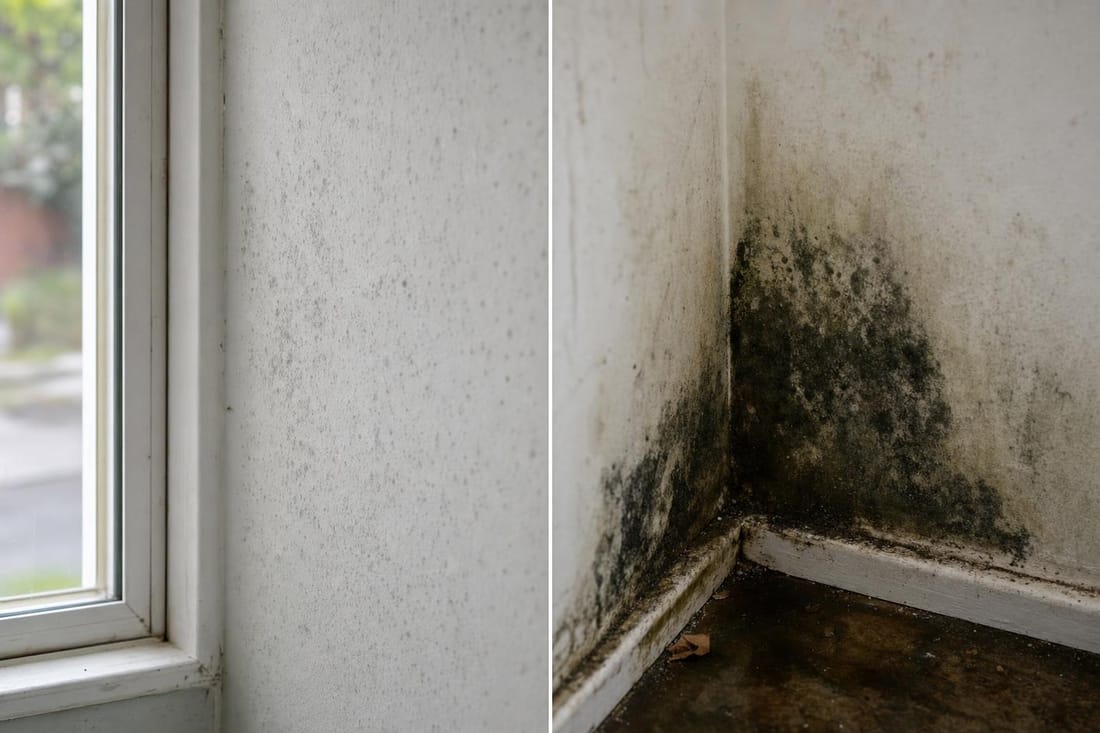
On painted drywall, mildew shows up as flat gray or black speckling that cleans off the paint surface and doesn't come back once the room is dried out — common above showers, behind furniture against exterior walls, and around drafty windows where condensation collects.
Black mold on walls looks like a darker, spreading patch that may feel damp or slimy, sometimes with a halo of discoloration around it. The telltale sign: it reappears after you clean it, because the growth has penetrated the drywall paper or the wall cavity behind the paint. That points to a leak, plumbing issue, or chronic condensation inside the wall — not just surface humidity.
Because drywall is both food and sponge, depth matters more here than on any other surface. The full breakdown — the three depths, the stain-versus-growth pattern, the press and moisture tests, and when the board has to come out — is in black mold vs mildew on drywall and painted walls.
Black Mold vs Mildew on Wood
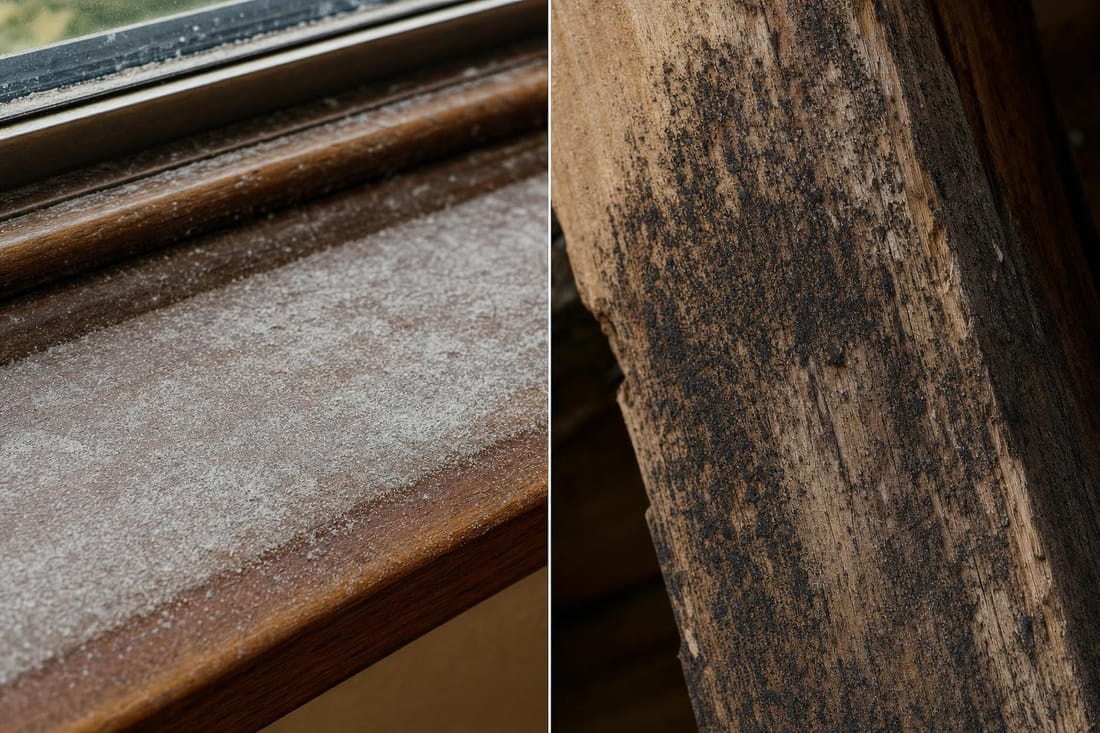
Wood is porous, so it behaves differently from tile or glass. Mildew on wood (window sills, trim, furniture) stays on the surface as a powdery gray film and sands or wipes off without leaving deep staining.
Black mold on wood sinks into the grain, leaves dark stains that don't fully sand out, and can soften or weaken the wood over time. On framing, subfloor, or sheathing this is a structural concern, not a cosmetic one — wood that stays wet long enough to grow black mold has usually been wet for a while.
Wood also has a third possibility that walls and tile don't: wood rot, which consumes the timber itself rather than living on it, and which matters far more than either mold or mildew. Black mold vs mildew on wood covers the screwdriver test that rules it out, plus the sanding test for depth.
Black Mold vs Mildew in the Shower and Bathroom
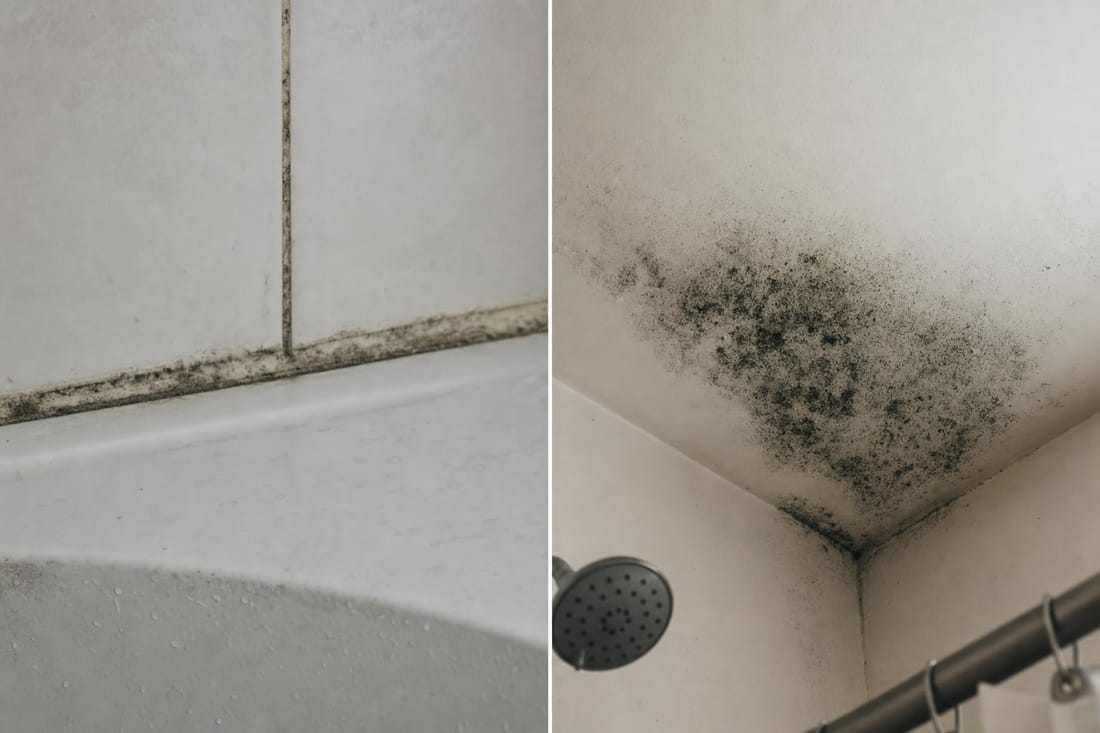
Bathrooms blur the line because they're warm, humid, and frequently wet. Most of what appears on grout lines, caulk, and tile is mildew or pink/black surface mold that responds to regular cleaning and better ventilation. The pink slime is usually Serratia bacteria rather than fungus, but the fix is the same: reduce moisture.
Be more cautious if dark growth appears on the ceiling, on drywall above the tile surround, or around the base of the tub — porous spots where water lingers. Growth there, especially if it keeps returning, is more likely true mold tied to a ventilation or waterproofing failure.
Two deeper guides split this one apart, because the tiled surfaces and the porous ones need different answers: black mold vs mildew in the shower covers grout, caulk and why recurring caulk growth is a failed seal rather than a cleaning failure, and black mold vs mildew on a ceiling covers reading the pattern to tell a roof leak from condensation — plus the asbestos caution that applies to older textured ceilings.
Can Mildew Be Black?
This is the single most common point of confusion, so it's worth answering directly: mildew can darken to a dull gray-black as it ages, which is exactly why people mix it up with black mold. The difference is in how it grows, not just the color. Aged mildew is still flat and powdery and stays on the surface. Black mold is slimy or fuzzy, raised, and embedded in the material.
So "is mildew black?" — it can look blackish, but if it's flat, dry, and wipes away cleanly, it's behaving like mildew. If it's slimy, spreading, and rooted in, color is the least of your concerns: respond to it as mold.
Health and Property Risk
Both can irritate sensitive individuals — sneezing, congestion, itchy eyes, throat irritation. The difference is scale and depth. Mildew is mostly a surface allergen. Established mold can release more allergens and, in some species, mycotoxins, and because it grows into building materials it can cause real structural and air-quality problems if ignored.
Any persistent musty odor should be treated as a warning sign, even when visible growth is limited — smell is often the first clue to mold hidden behind walls or under floors.
Cleanup vs Remediation
Small mildew patches and surface mold on non-porous surfaces (tile, grout, glass) can usually be cleaned yourself with proper ventilation, gloves, and a mask. Dry the area thoroughly afterward so it doesn't return.
Call a remediation professional when growth:
- covers more than about 10 square feet,
- keeps returning after cleaning,
- has spread into drywall, insulation, or wood framing, or
- follows a flood or long-term leak.
Wiping the surface without fixing the moisture source virtually guarantees the problem comes back.
How to Prevent Both From Returning
Mold and mildew share one root cause — moisture. Control it and both stay away:
- Keep indoor humidity below 50% (a dehumidifier helps in damp climates).
- Fix leaks fast — roof, plumbing, and window seals.
- Increase airflow with exhaust fans in bathrooms and kitchens.
- Keep condensate lines and gutter drainage clear.
- Dry wet materials within 24–48 hours of any water event.
Without moisture control, both mildew and black mold are likely to come back no matter how thoroughly you clean.
When in Doubt, Identify First
If you can't confidently tell which one you're dealing with, don't guess. Take a clear, well-lit photo and use the Mold Finder AI photo inspection to estimate visual likelihood and prioritize where to look closer — then escalate to lab testing or a certified inspector if growth is widespread, recurring, or around porous materials. Early, accurate identification is what keeps a small cleanup from turning into a major remediation.